
Business 7 min read

Hybrid Work Utrecht 2026: How Companies Are Rethinking Office Space

Unusual Office
Unusual Team
7 min read
Placeholder Image 19

Hybrid work is no longer a transition phase. In 2025, 80% of Dutch businesses with at least ten employees enabled remote work, and 61% of employees could use it in practice, according to Statistics Netherlands. The question behind hybrid work Utrecht 2026 is not whether people can work elsewhere. It is what the office should do when they come in.

Utrecht companies are responding by replacing blanket capacity with a mix of spaces: flexible seats for individual work, dedicated setups for frequent users, private team rooms, and professional address services for organisations with a distributed footprint. The office is becoming smaller in some cases—but more purposeful.

The answer at a glance

A sound hybrid office strategy in 2026 starts with attendance and work modes, not total payroll headcount. Provide flex access for occasional users, permanent desks for equipment-heavy roles, private rooms for teams that need continuity, and bookable meeting space for collaboration peaks. Keep address and mail services separate from seating so the company does not rent unused room merely to maintain a professional presence.

At Unusual Office, those needs map to four products in one Utrecht location: Usual Membership, Unusual Desk, Unusual Office, and Unusual Postbox.

What hybrid work Utrecht 2026 data says

CBS reported in February 2026 that remote-working access has stabilised rather than disappeared. Around four in five companies enabled it in 2025, broadly unchanged since 2022. ICT and financial services were among the sectors where remote access was most common.

In the second quarter of 2026, roughly 3.6 million employed people worked from home during the reference period. They averaged 14.2 home-working hours per week—about two standard days—and 44.7% of their worked hours.

Those national figures do not describe every employer, but they make five full-attendance days difficult to justify for many knowledge-work teams. Physical proximity still matters: people cluster meetings, onboarding, decisions, and team rituals on office days. A good hub concentrates those reasons to attend.

From assigned capacity to purposeful capacity

The old office question was: “How many people work here?” The hybrid question is: “What are people coming here to do?”

Four work modes usually appear:

  1. Individual focus: a reliable desk, Wi-Fi, and places for calls.

  2. Equipment-based routine: the same monitor, storage, and workstation several days a week.

  3. Team continuity: a private room for shared context, overlapping calls, and confidential work.

  4. Collaboration peaks: meeting or event capacity for planning, training, and customer sessions.

Trying to satisfy all four with identical assigned desks creates waste. Trying to satisfy them all with hot desks creates frustration. The more resilient model is a portfolio.


Placeholder Image 20
Hybrid office strategy

The four-product hybrid office strategy Netherlands teams can use

Usual Membership for fluctuating attendance

Usual Membership gives employees or contractors flex-desk access without assigning permanent space. Launch pricing is €10 + VAT daily, €145 + VAT monthly, or €1,740 + VAT yearly. It works for remote-first staff, travelling colleagues, and teams that need a shared Utrecht day without carrying empty capacity through the rest of the week.

The plan includes Wi-Fi, reception and open meeting areas, event-space and café-space access. One guest is permitted, meeting rooms have member rates, and the yearly plan includes a postbox and mail service under preview terms.

Unusual Desk for anchor users

Unusual Desk gives a frequent user the same desk every day. At €245 + VAT per month, it adds continuity, postbox and mail service, and a business registration address described as suitable for KVK use. It is useful for the people who make the hub operational: a country lead, office coordinator, founder, or equipment-heavy specialist.

The desk remains shared-environment space: an anchor rather than a closed department. That suits small organisations wanting community and day-to-day consistency.

Unusual Office for team privacy

Unusual Office provides furnished private rooms for up to two, three, or four people. The rooms can be booked daily, weekly, monthly, or yearly, with launch monthly prices from €850 + VAT. They suit teams that share confidential information, spend long periods in parallel calls, or need a door between group work and the wider coworking floor.

Because private rooms and coworking share one facility, a company can house the regular team privately and give less frequent colleagues flex access—more efficient than sizing a room for one monthly all-hands day.

Unusual Postbox for presence without surplus space

Unusual Postbox handles business mail for €35 + VAT per month, with a dedicated postbox, storage for up to three months, and weekly email notifications. Scanning and digitising can be added for €10 monthly.

This helps a distributed business maintain a postal presence without daily seats. It is not automatically a KVK visiting address; registration needs genuine activity, a suitable agreement, and a registration-enabled desk or office package.

A practical allocation model

Imagine a Utrecht company with twelve people. Two founders attend four days a week, three specialists attend twice, five colleagues come for a weekly team day, and two work mainly abroad.

A traditional approach might lease twelve desks. A hybrid model could use:

  • a small private office for the core team;

  • two dedicated desks for regular specialists;

  • flex memberships or day access for the weekly group;

  • a large meeting room for the all-hands block;

  • one post and registration setup aligned with actual business activity.

Track the highest number present at once, not payroll headcount. Separate individual work from meeting demand: six people may attend on Tuesday without needing six assigned desks if half the day is a workshop.

Five hybrid workplace trends 2026 leaders should act on

1. Peak days matter more than averages

An office that is half empty on average can still be unusable on Tuesday. Measure day-by-day peaks, meeting-room pressure, and call-space demand.

2. The commute must earn itself

People will travel for better collaboration, useful relationships, specialist equipment, and a pleasant setting. They resent travelling to perform the same solo tasks on a worse screen.

3. Hospitality becomes infrastructure

Reception, easy guest arrival, working video equipment, coffee, and lunch options determine whether a client or team day flows. They are not decorative extras on a hybrid peak day.

4. Different roles need different permanence

A product designer may need a dedicated setup; a travelling sales lead may need ten flexible days; a finance team may need a private room. Equal treatment does not require identical workspace products.

5. Address strategy separates from desk strategy

Mail, KVK registration, client presence, and seating are related but distinct. Treating them as separate decisions prevents a company from renting a room purely to receive post—or buying a postbox and assuming it satisfies registration rules.

Why Utrecht is suited to the hub model

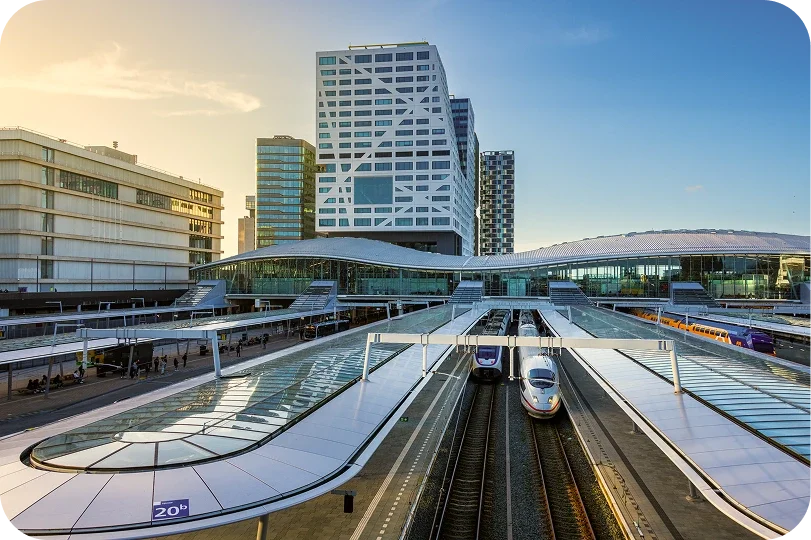
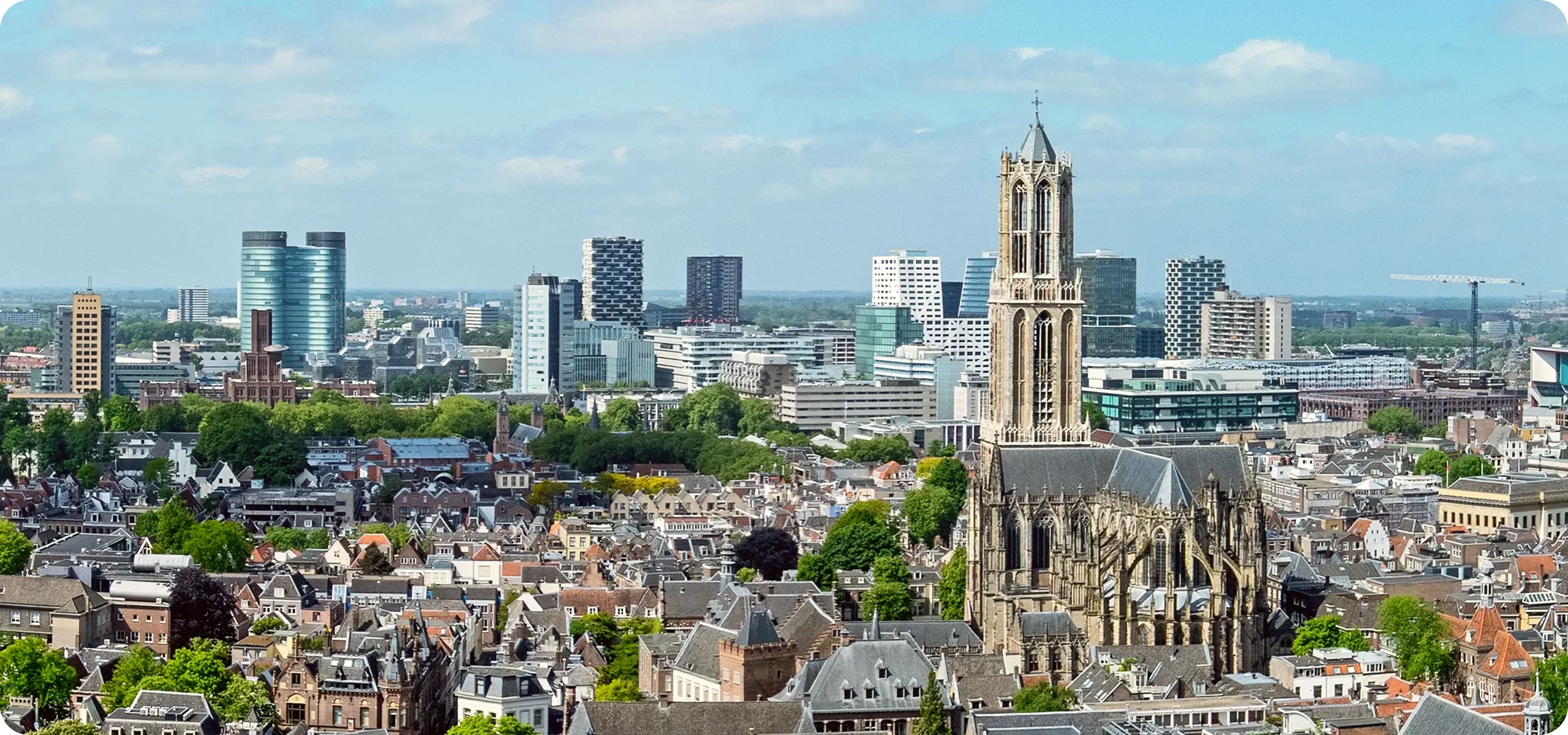
Utrecht’s national connectivity makes it a strong gathering point for distributed teams. NS calls Utrecht Centraal the country’s largest station, and colleagues can walk from train to office, lunch, and an evening venue. Flexible space also secures a central environment without leasing every future square metre.

That makes the future of work Utrecht less about abandoning offices and more about using them deliberately. The city hub is where distributed work becomes a company again—for a meeting, a sprint, a client day, or simply the social texture that video calls do not provide.

Build the mix, then keep measuring

Review attendance quarterly: meeting-room bookings, peak occupancy, no-shows, travel, and whether private space supports focus or merely stores things. Change the mix before frustration becomes a relocation.

For hybrid work Utrecht 2026, flexibility is not the absence of a plan. It is a plan designed to change. Unusual Office’s four workspace layers let a company create that plan at one central address, from a single day pass to a stable private team hub.

Start with peak simultaneous attendance, not total headcount. Review actual day-by-day use for at least several weeks and add capacity for visitors and growth. Separate desks from meeting demand: a team may need a room for eight on Tuesday but only four individual workstations before and after the meeting.

A mixed setup is usually strongest: flexible access for occasional users, dedicated desks for frequent or equipment-heavy roles, a private room for the core team, and bookable meeting space for peak collaboration. The right proportion depends on attendance, confidentiality, calls, commute patterns, and how often clients visit.

Potentially, if the product provides a genuine visiting address, the company carries out real activity there, and the agreement meets KVK proof requirements. A mail-only postbox is not enough. Confirm the registration-enabled desk or office package and keep the signed service or rental documentation before applying.


Unusual Office
Unusual Team Team