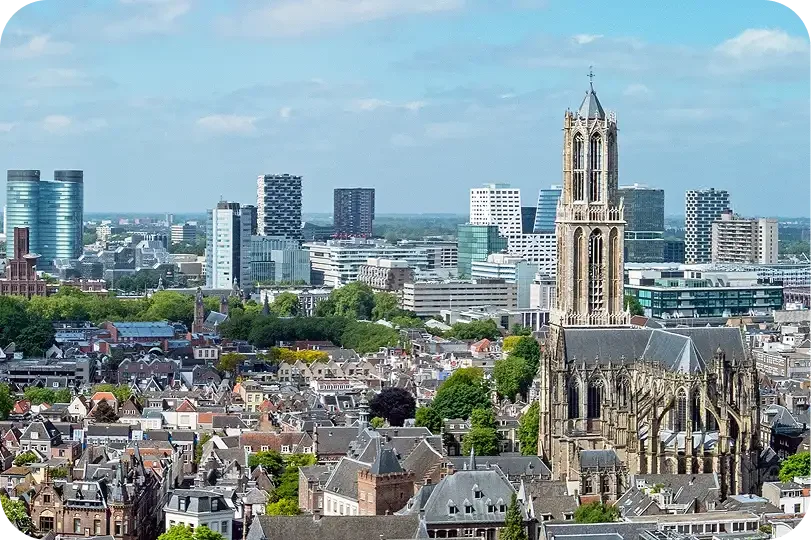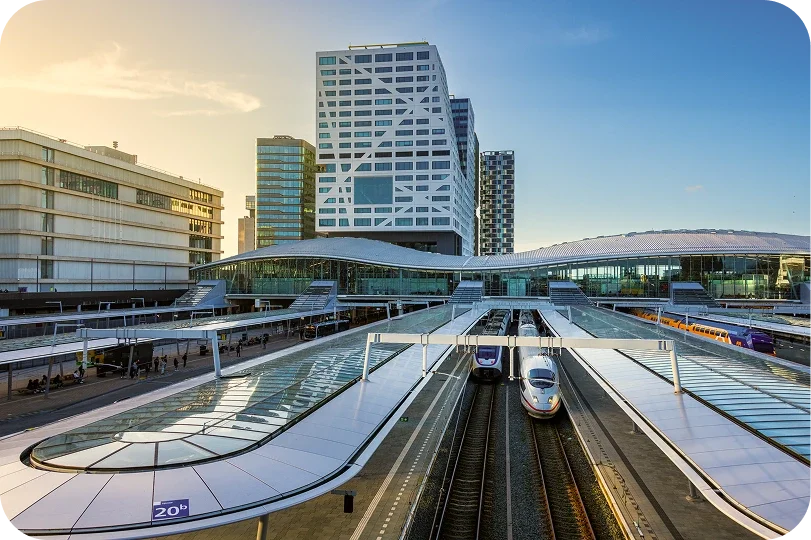





For small teams, Utrecht has become one of the most logical places in the Netherlands to put down a work base. It offers national rail access, a deep professional talent pool, and a centre that clients can reach without crossing a sprawling business district. The challenge is availability. Private office rental Utrecht 2026 means choosing in a market where well-connected, good-quality space is in demand—and where a long lease is no longer the only way to get a room of your own.
The practical answer is yes: Utrecht is a strong office city in 2026, particularly for teams that meet colleagues or customers from several parts of the country. But smaller businesses should compare a conventional lease with a serviced, furnished office before committing capital and time.
The 2026 answer at a glance
Utrecht works especially well for teams of two to four that want a central Dutch hub rather than a large headquarters. Market reports published in 2026 point to sustained demand for offices near Utrecht Centraal, declining availability of quality stock, and premium rents in the centre. Those conditions reward flexibility: a furnished room booked by the day, week, month, or year can be more useful than taking excess square metres “for later.”
Unusual Office is built around that smaller-team need. Its private rooms sit inside The Unusual Space at Vinkenburgstraat 2A, close to the Oudegracht and around ten minutes on foot from Utrecht Centraal. Launch pricing ranges from €50 + VAT per day for a two-seat room to €1,700 + VAT per month for a four-seat room.
What the Utrecht office market is signalling in 2026
The Knight Frank Dutch Office Market Report 2026 describes Utrecht office demand as rising and the station area as the region’s prime hotspot. It places city-centre rents roughly between €200 and €350 per square metre per year and notes occupiers’ preference for strong rail connectivity. A separate Cushman & Wakefield Netherlands Outlook 2026 reports Utrecht office vacancy around 5.7% at the start of the year, with a wider structural shortage of high-quality space in prime locations.
Those are market-level figures, not a quote for one room. Still, they show the direction: central, future-proof offices are not the part of the market where a small team can assume unlimited choice or bargain rents.
The city itself is also growing. Utrecht counted 378,140 residents on 1 January 2026, and the municipality expects it to pass 400,000 around 2030. Growth supports talent and customer density, but it also keeps pressure on desirable locations.